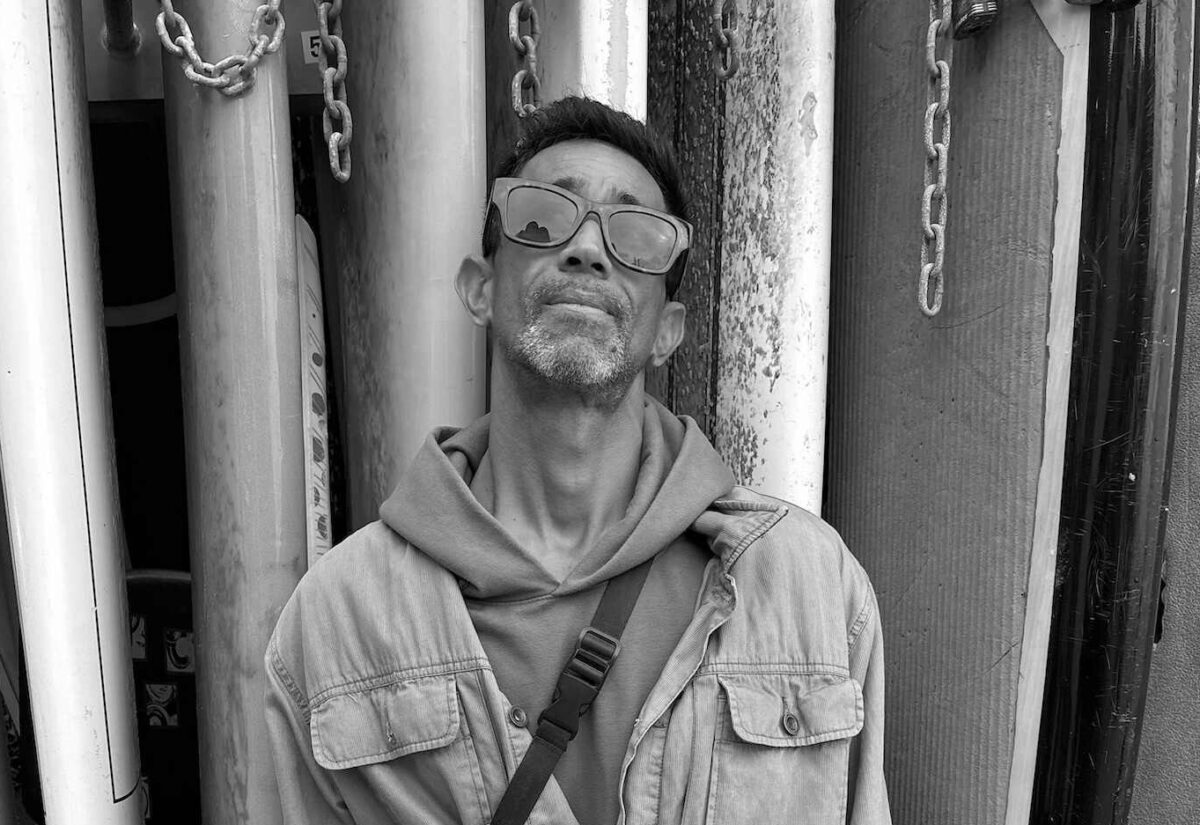
Kelly Slater had just won the 2022 Billabong Pro Pipeline, his eighth “Pipe Masters” victory, just days before his 50th birthday. I pushed through a crowd that was rushing in the opposing direction for the stage where they would watch a champagne-doused Slater and Moana Jones Wong hoist oversized checks and whatever else the WSL doled out to the victors. I climbed the sand-dusted steps towards the Gerry Lopez / Volcom House to make my escape along Ke Nui Road and ran into JP. It was a surprise. I had never seen him outside of Waikiki Beach. Not ever. He seemed unhinged and out of sorts, which was equally shocking because he typically oozed more cool than a Fonzarelli. Was he upset by the GOAT’s fairytale win? Slater did defeat Seth Moniz after all, the crown prince of Waikiki Beach’s Moniz Family Surf.
“You good?” I asked with my hand on his sinewed shoulder. “I’ve gotta get out of here, did you drive?” he replied. I couldn’t help with his inferred request because I was spending the night over at Ke Iki Beach. He picked up on my concern and responded “I don’t belong here. The North Shore. This crowd, the people, the vibe, it’s not me.”. I understood what he meant and yet immediately retorted “Of course you belong here. It’s all of them that are out of place.” as I tilted my head towards the mob on the sand while pointing toward his chest “You’re Hawaiian, this is your island, your wave. All of it.”. I had somewhere to be, but first confirmed that he had a way back to the South Shore. TheBus Route 60 to town was coming soon, so with peace of mind we clasped hands, embraced, patted backs and left it at that. Or so I thought.
John Paul “JP” Kaleopa’a PART I
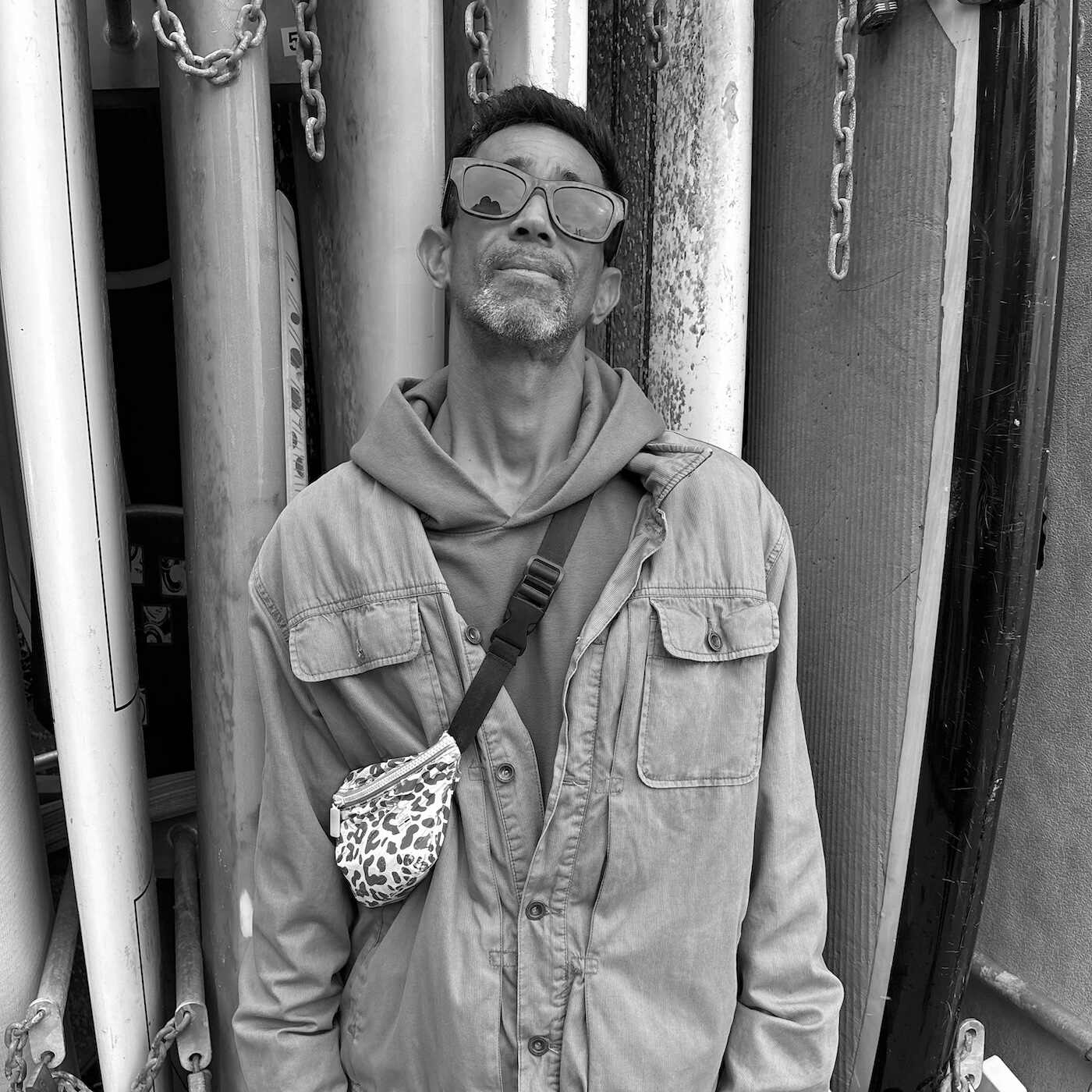
John Paul “JP” Kaleopa’a’s face and chiseled physique are as much a staple at Waikiki’s Kuhio Beach as the 13-foot bronze statue of Duke Kahanamoku at the makai end of Uluniu Road. He was born in the summer of 1984, a landmark period defined as the high-water mark of 80s pop culture, a booming US economy, and intense geopolitical tension marked by the USSR’s boycott of the Summer Olympic Games in Los Angeles. None of that was felt by the Kaleopa’a clan, though. JP’s childhood home was just two blocks away from where the sand meets the sea to sweep away the ongoings of the world.
It’s cliche to use the word baptism when it comes to a boy’s immersion into surf culture, but that’s exactly what occurred for the young Hawaiian. In the late 1980s into the early 1990s. JP was taken under the wings of Bonga Perkins, Joey Valentine, Dino Miranda, Lance Hookano, Tommy Tanaka, Roy “China” Uemura, and a slew of other Waikiki beachboys. They taught John Paul to ride the surf by board and outrigger canoe, while uncle’s Gabby, Clay, Tommy, Jammer, Gill and the remainder of the old guard educated JP on the importance of spreading aloha to the visitors that arrived by the hoards. The latter was a considerable task given that during the 1990s, the average daily visitor population in Waikiki ranged between 60,000 and 80,000. As indicated, the U.S. was experiencing the longest economic expansion in its history. Competitive longboard surfing was also enjoying a significant resurgence and evolution in the 1990s, shifting toward a high-performance style that suited JP’s athleticism.
Armed with natural talent and informed by generations of wisdom passed down to him by the beachboys, he enjoyed early successes in menehune (youth) surfing competitions. A pivotal moment arrived (or didn’t) in JP’s life when pioneering Hawaiian world champion and “Queen of Makaha” – Rell Kapolioka’ehukai Sunn – organized a group of young Hawaiians to compete at the 1995 Biarritz Surf Festival. The BSF was a premier summer gathering at the Côte des Basques in France that showcased longboarding, tandem surfing, and cultural exchanges. It had a lot in common with the surfing scene in Waikiki. Among Hawaii’s menehune surfers that Aunty Rell invited on the trip, was an 11 year old John Paul Kaleopa’a.
Looking for JP in the short clip? He didn’t go. While his mother allowed him the freedom to run around the sands of the south shore with little supervision, Miss Kaleopa’a was not about to let her preteen travel 7,500 miles out of her periphery. Instead John Paul remained and continued his tutelage in the birthplace of surfing. He notched a number of state titles in the process, and as the years passed he explored competition on the mainland USA, Mexico, and Australia. His World Surf League (WSL) profile still exists, but it’s devoid of any ranking information because JP ended his competitive career in 2003 to focus on loved ones. His wife Malia, an impressive longboarder in her own right, was pregnant with their daughter, Kelis (born 2004). Their son Moses entered the world seven years later.
Despite sacrificing his own competitive aspirations, JP earned a title that in the opinion of this surf historian is far more important. He received his Waikiki beachboy card in the year that was considered the end of an era. 2004 took the last of the original Waikiki beachboys, including Harry S. Robello, James “Jammer” Keanu, and Gilbert “Zulu” Kauhi. They, among a select few, determined who was worthy of the designation by signing the card. When they passed, the tradition essentially ceased, with JP receiving his imprimatur in the closing chapter. While the state’s Department of Land and Natural Resources maintained a Waikiki Operator Permit after 2004 (suspended in 2022) it was nothing more than a pragmatic procedure to verify physicality, water skills, first aid, and CPR certification.
As the one of the last-ordained beachboys, JP pollinates aloha every paddle and step of the way. It’s no exaggeration to state that there are thousands around the world who hold an image of John Paul Kaleopa’a in their mind as they think fondly upon their time on O’ahu. He may not enjoy the same accolades as the persona behind the bronze statue at Kuhio Beach that bears a resemblance to him, but the universe has repaid JP’s good deeds through his ohana. First born, Kelis, and nephew Kaniela Stewart are consistent world title contenders on the WSL Longboard Championship Tour, with larger than life images clinging to the windows of the TENORE store on Kalakaua Avenue’s luxury row. The Surfers Journal’s Beau Flemister did give the Hawaiian some due in a 2024 feature titled O Beachboy, Where Art Thou?, although JP brushed it off when I brought it up over small talk while crossing Kalakaua on a sunny Saturday afternoon. He’s not one for showered praise. I had long considered writing an article on JP, but his dismissive reaction to the TSJ piece shut the door on that aspiration. It cemented my suspicion that the world didn’t need yet another article on the Waikiki beachboys. Then, things changed.
Back to the North Shore
Christmas is two weeks away. Still dripping from one last surf before leaving for the mainland for the Holidays, I tuck a board into the back of a Honda Odyssey a few of us use for storage in a covered parking lot on Koa Avenue. I close the hatch, then hear my name. I see JP walking in my direction with uncharacteristic determination.
He has a plan. He’s going to bridge the gap between the South Shore and the North Shore. More specifically, he intends to represent the Waikiki beachboy legacy at Banzai Pipeline, because for all of the adoration the gang gets for sharing aloha with the world, recognition of surfing prowess is not what it should be. Cultural ambassadors? Absolutely. Surf instructors and canoe guides? Certainly. Entertainers? There was a time. Seducers of visiting wahine? Lips are sealed.
I’m intrigued, because I fully agree that there is a polarizing sentiment that separates opposing sides of O’ahu – a monicker which is ironically translated to mean the gathering place. The North Shore’s surfing personalities venture over to the South Shore when swell switches from one side of the island to the other in the summertime. Every July they spill into the Ala Moana Beach Park parking lot with their Toyota 4runners and GMC Sierras to flood the lineup at Bowls, and venture over to Canoes and Queens for a “fun day” of filming for their YouTube channels. One of them even opened a neon-colored surf school on Kalakaua Avenue in January of 2024, plucking tourist dollars from the pockets of beachboys who don’t have the capital for a 20K/month brick and mortar. But it’s not the other way around. The beachboys (what’s left of them) rarely make it over to the North Shore for a plate lunch at Pupukea Grill, much less to surf when the gettin’s good (October to March). It’s not like they haven’t had the skill to do so. If Rabbit Kekai could hang-five at a barreling deep-water Kunas he could certainly have tamed an unnamed (at the time) Off The Wall. It’s not the North Shore’s fault, necessarily. After all, they honored the South Shore’s most famous son with the Duke Kahanamoku Invitational Surfing Championships from 1965 to 1984 at Sunset Beach. Although, the annual invitees list featured more Ke Nui Road addresses and Australian accents than representatives from the 96815 zip code.
What has kept the Waikiki beachboys from staking indigenous title over the wave-rich coast of the Seven Mile Miracle? Traffic’s a bitch, for one. Further, the North Shore receives significantly more precipitation due to trade winds from the northeast, bringing moisture-laden air from over the Koolau Mountain Range to the North (and East) side. Beachboys famously hate the rain. Lastly, and as John Paul Kaleopa’a alluded to when we bumped into each other three years ago on the Backdoor stairs between Volcom houses – the vibe is just different. The thing is, JP recognizes that it’s time for all of that to end, and it won’t be by taking tourists out on canoe rides at Haleiwa Beach Park, or strumming an ukulele to their delight at Kuilima Cove. No, if you want to make a statement, then you’ve got to make a statement. As one of the last of the Waikiki beachboys it’s his duty to show the surfing world what the best of them can, and have always been able to do – ride the wild surf of the Pipeline in the thick of the winter season. He has already secured a South Shore shaper to build a quiver of custom boards fit for the world’s most infamous wave, Denny Schwartz of Aloha Brothers Surfboards.
And he wants me to document his journey.
Before I could utter “Why me?” while leaning on a pillar of the parking lot that JP cornered me in, he explains. Those words that I said to him at our impromptu meeting amidst the anxiety-inducing conclusion of the 2022 Billabong Pro Pipeline have haunted him for the past three years. They were the catalyst for his mission to bring the North and South together. To aptly quote the works of George R. R. Martin, winter is coming, and when it does, John Paul Kaleopa’a will be there with his beachboy banner flying high.
Stay tuned for Part II.
~ ALOHA ~