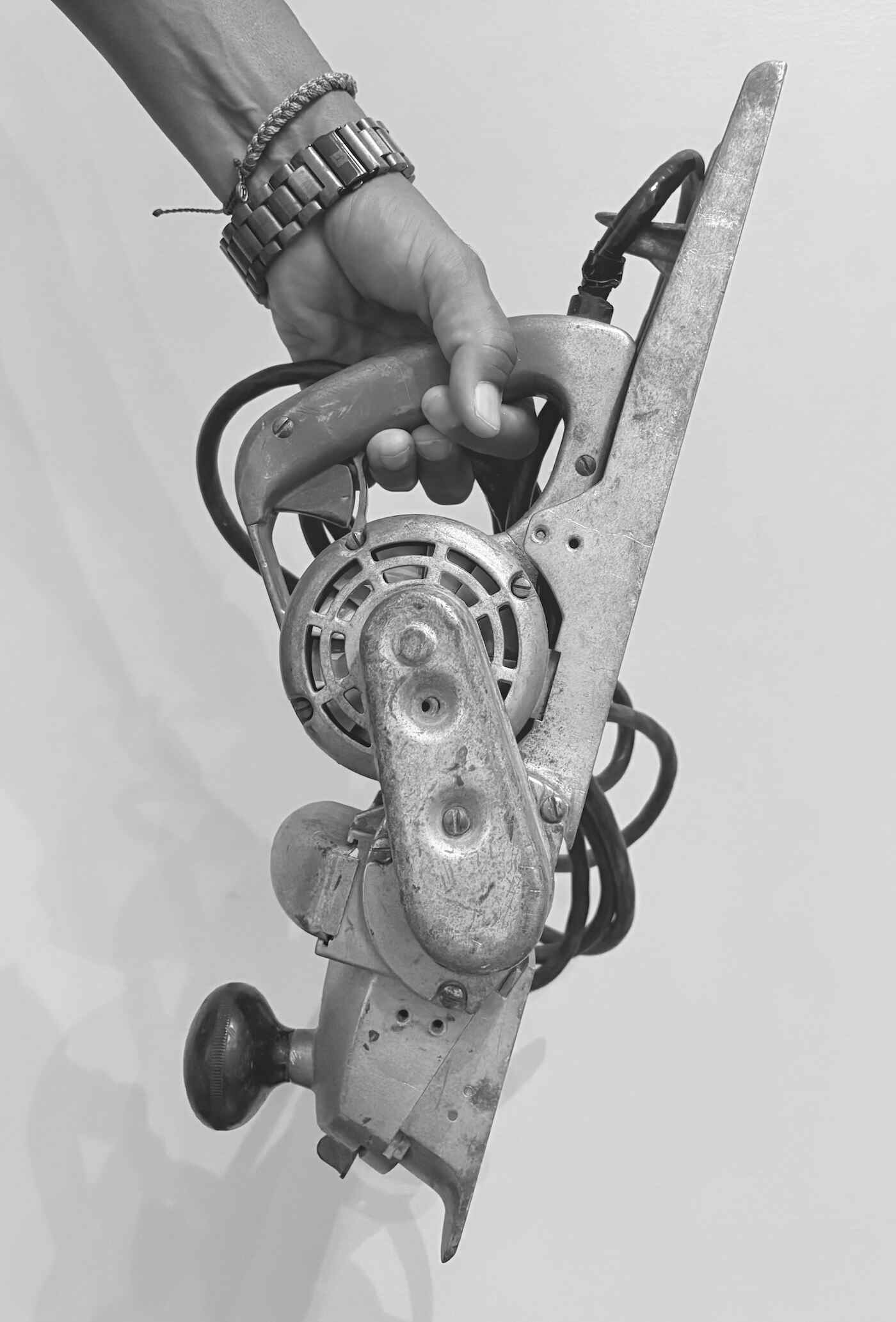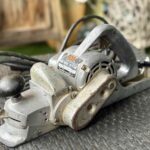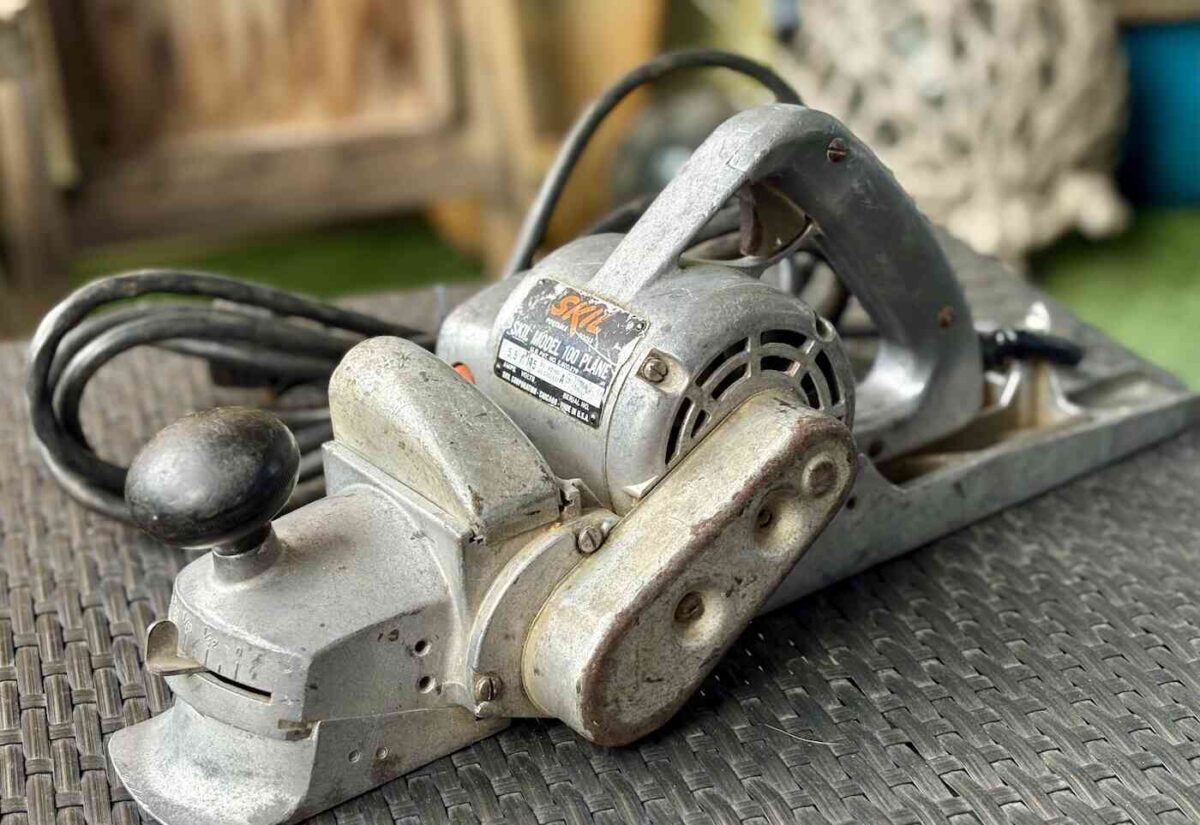
” Every shaper of any stature has what is known as the SKIL 100.” (Randy Rarick)
I’ve got to admit, the initial allure of documenting our culture had nothing to do with power tools. But the more a budding surf historian peels back the layers of how wave-riding craft has evolved since its invention, arriving at the instruments used to shape those boards becomes inevitable. As much as my sweet spot is found penning another piece on an iconic surfer or board builder from decades past, or publishing a pictorial on a relic discovered at a Midwest estate sale, I’ve had to escape my comfort zone and hone in on the less sexy stuff to get to the core of the quintessential surfboard.
So yeah, power tools. More specifically – surfboard planers.
By now, anyone who has entered a proper surfing museum will have come across antiques or replicas of the instruments ancient Hawaiians – the irrefutable inventors of surfboard riding – used to carve, shape, and finish solid-wood boards of alaia, paipo, kikoʻo, and olo.
Long before the modern surfboard planer transformed board shaping, Native Hawaiian craftsmen were creating sophisticated craft entirely by hand, using a combination of stone, coral, wood, and natural abrasives. The process began with the careful selection of a suitable tree, commonly koa, ʻulu (breadfruit), or wiliwili, depending on the type of board being made. Once the tree was felled, the timber was roughly shaped with a stone adze, a hafted tool with a basalt blade that functioned somewhat like a combination of an axe and modern woodworking plane. One could not fault an archaeologist for unearthing an adze and mistakenly identify it was a weapon of war instead of something used to build something that allowed man-and-woman to walk on water.
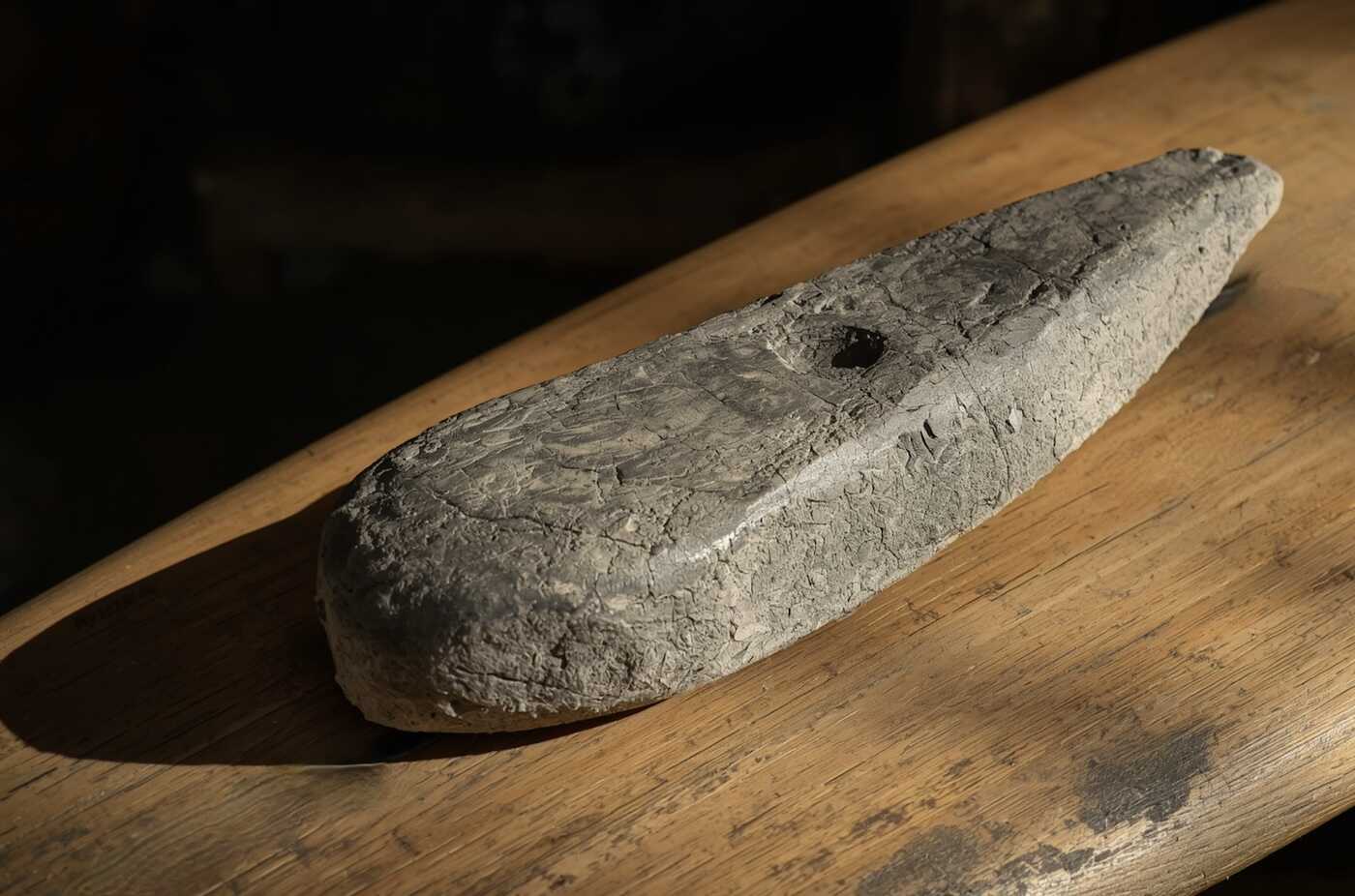
The adze did the heavy work, allowing the craftsman to gradually remove wood and establish the board’s basic dimensions and contours. From there, the shaping became increasingly refined. Jagged pieces of coral were used to scrape and reduce the wood further, while rough ʻōahi stones served as abrasive tools to remove the marks left by the adze and smooth the developing rails and surfaces. Different grades and shapes of stone were also used for finer shaping and smoothing. Historical accounts also describe the use of sand and, in later descriptions of traditional methods, sharkskin as progressively finer abrasives before each board’s shape met approval and was finished and protected using traditional materials such as burned kukui nuts, ti-root, or pounded kukui bark to darken the wood, followed by kukui-nut oil to create a smooth, polished finish and help protect the board from the salty unforgiving North Pacific. These crude but beautiful methods persisted until manual muscle-powered tools were borrowed from carpenters.
In the early 1900s, George Freeth and Tom Blake shaped their versions of wave-riding craft with a remarkably basic collection of woodworking tools. Their boards were built from large pieces of heavy lumber, so the process relied heavily on traditional carpentry tools, including hand saws for cutting blanks, chisels and gouges for removing material, drawknives and spokeshaves for reducing and refining the shape, and hand planes for gradually leveling and smoothing the deck, rails, and bottom. Sandpaper and other abrasives were then used to refine the surface. Blake’s later experiments with hollow, lighter-weight boards also required additional woodworking and construction techniques as he sought to reduce the enormous weight of traditional solid-wood Hawaiian surfboards.
Blake first experimented in 1926 by drilling hundreds of holes through a solid redwood board to remove weight, then sealing the openings beneath thin wood skins. He subsequently progressed toward genuinely hollow construction, carving internal chambers and eventually developing a lightweight framework of wooden ribs covered by thin plywood or veneer. His approach borrowed ideas from the construction of aircraft and boats, using the internal structure to provide strength without requiring a solid block of timber. Hand planes were particularly important to Blake’s shaping, allowing the innovator to progressively true the wooden surfaces, refine thickness, smooth transitions, and establish the contours of the deck, bottom, and rails before final sanding. Rasps, files, and abrasive paper could then be used for finer adjustments and surface preparation. By combining conventional carpentry tools with drilling, hollowing, thin-sheet construction, and lightweight internal bracing, Blake ultimately produced boards dramatically lighter than the heavy solid-wood designs that preceded them. His patented hollow design, introduced commercially in the early 1930s, helped establish a new direction for surfboard and paddleboard construction.
Around the same period that Tom Blake was developing some of his most influential wave-riding craft—including the kookbox, which he developed in 1929—electric power planers were also beginning to emerge. Through the late 1920s, 1930s, and into the early 1940s, portable and semi-portable electric planers remained relatively large and cumbersome, with some designs requiring more than one worker to operate effectively. The breakthrough came in the late 1940s, when Michigan machinist Henry Spitzley developed a much smaller portable power planer intended to be operated by a single person. The timing was remarkably fortunate for surfboard design. As the new generation of lightweight power tools was emerging, Southern California surfers and board builders Joe Quigg and Bob Simmons were experimenting with lighter sandwich-style constructions incorporating foam, plywood, and balsa, while Dave Sweet, in 1953, received a block of Styrofoam and began developing early foam-board prototypes. The arrival of a compact, one-person power planer alongside these increasingly lightweight board-building materials represented an extraordinary convergence of technology and design—one that would help transform surfboard construction from the labor-intensive woodworking of the solid-wood era into the faster, more precise shaping process that defined the modern industry.
The power planer empowered mid to late 20th century surfboard builders to remove foam quickly and accurately, but under the most skilled eyes and hands allowed it to be done in a remarkably similar manner to what Native Hawaiian master-craftsmen were able to do – begin with a blank, remove material methodically, refine the contours, smooth the surface, and ultimately create a board designed not just to stand upon, but interact with a wave.
But what many (err…some) want to know – is what was the singular late 1940s Spitzley invention that would reshape the future of surfboard building? In case you didn’t catch the title of the article you’re currently reading, it was the SKIL 100 – a tool that would later become legendary among surfboard shapers. Compact, relatively light (compared to its predecessors), easy to control, and blessed with the kind of mechanical stubbornness that makes old tools dependable, the planer found its way into shaping bays from California to Hawai‘i and beyond, becoming as familiar as foam dust on their floors. It could hog material when you needed to move fast, feather a rail when finesse mattered, and—most importantly—put the cut exactly where a skilled shaper told it to go. Decades later, that same combination of control, simplicity, and durability explains why shapers and restoration specialists still hunt them down, scouring eBay, specialty antique hardware stores, and used-tool barns to find one in working order—or at least one that can be brought back to life. Modern commercial surfboard planers, which rely heavily on plastic components, may have more bells and whistles, but the SKIL 100 has something harder to engineer: a reputation earned one board, one pass, and one pile of foam shavings at a time.
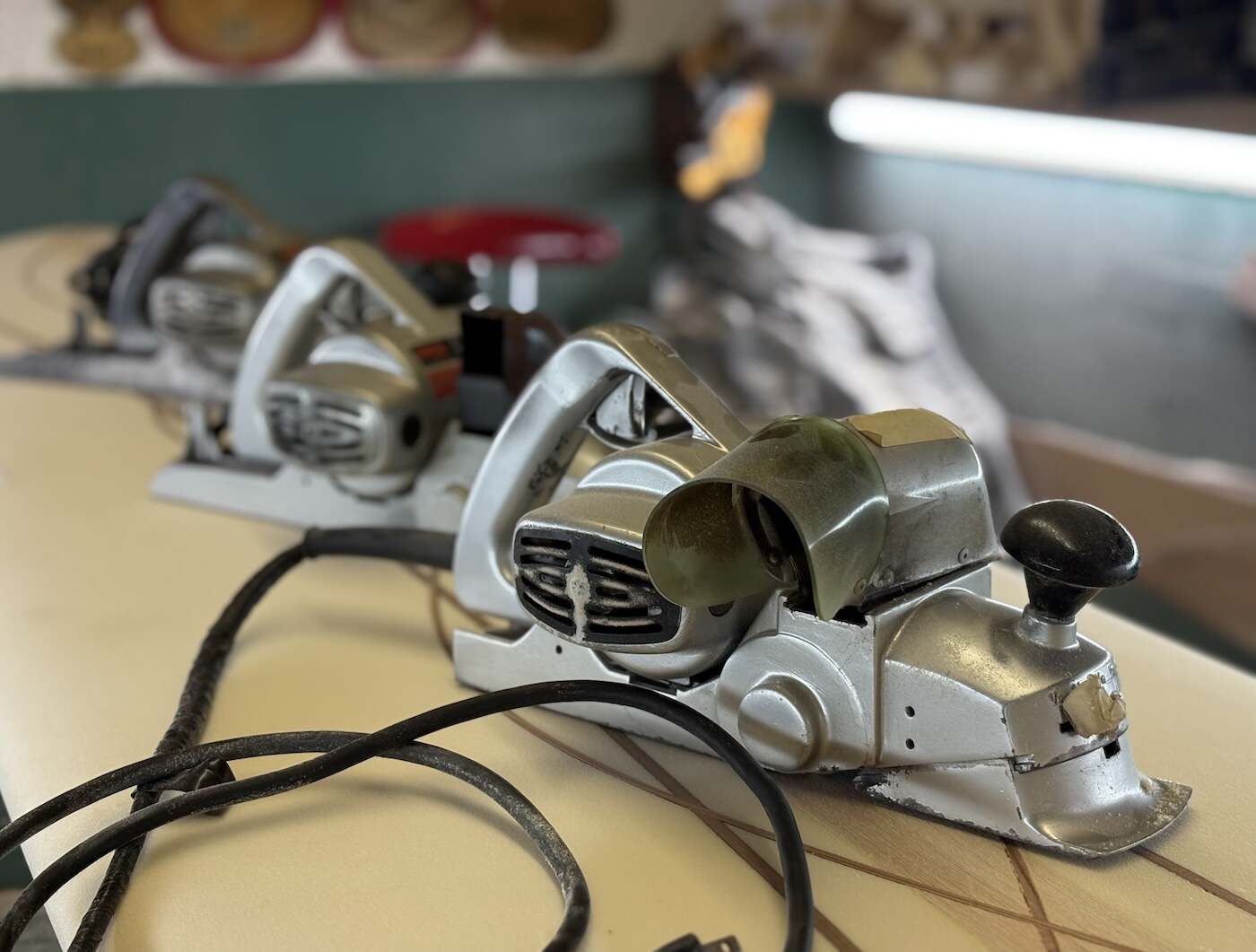
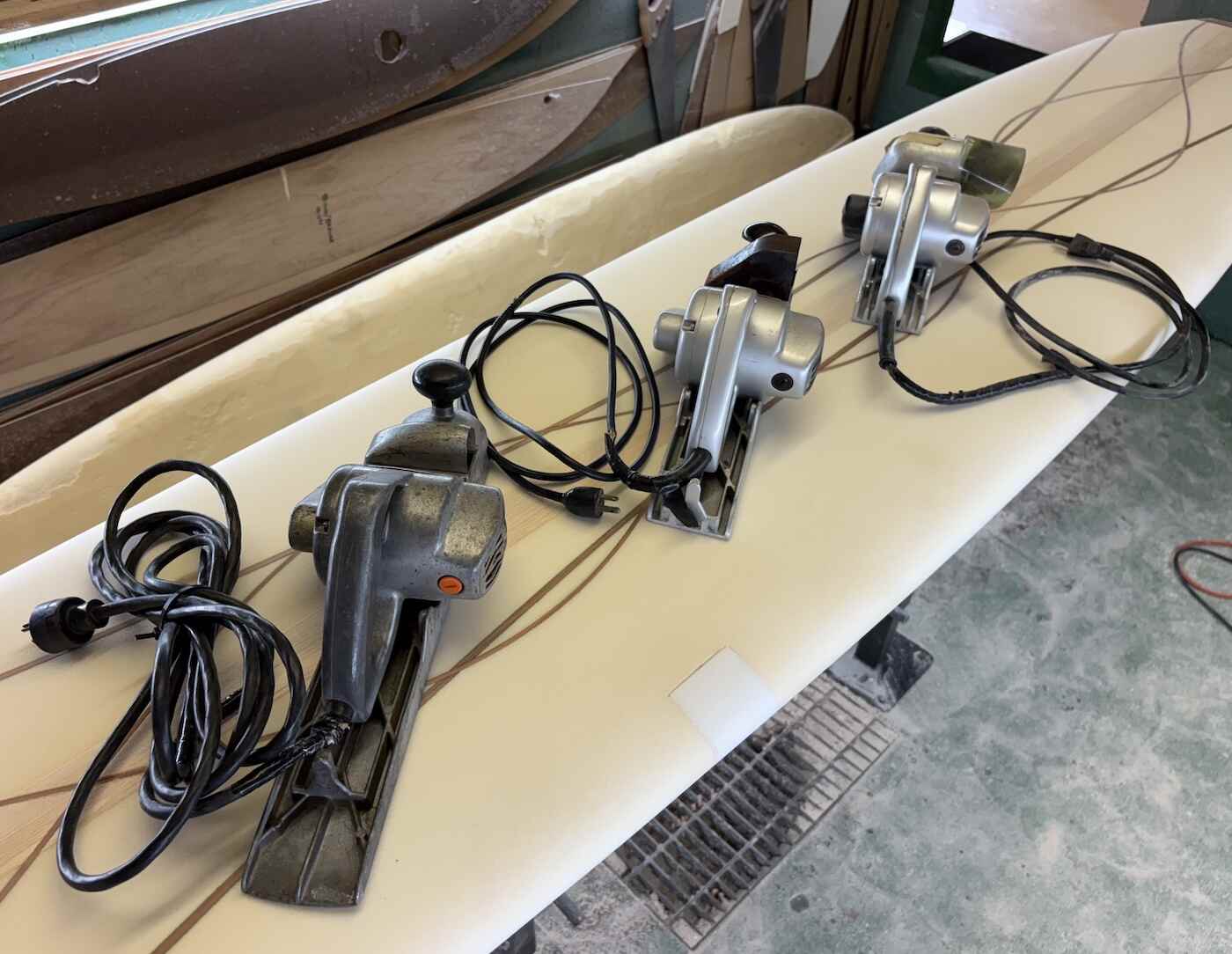
For further insight into what made—and continues to make—the SKIL 100 planer so beloved by shapers and board builders, we reached out to SMH consultant and preeminent surfboard restoration expert Randy Rarick.